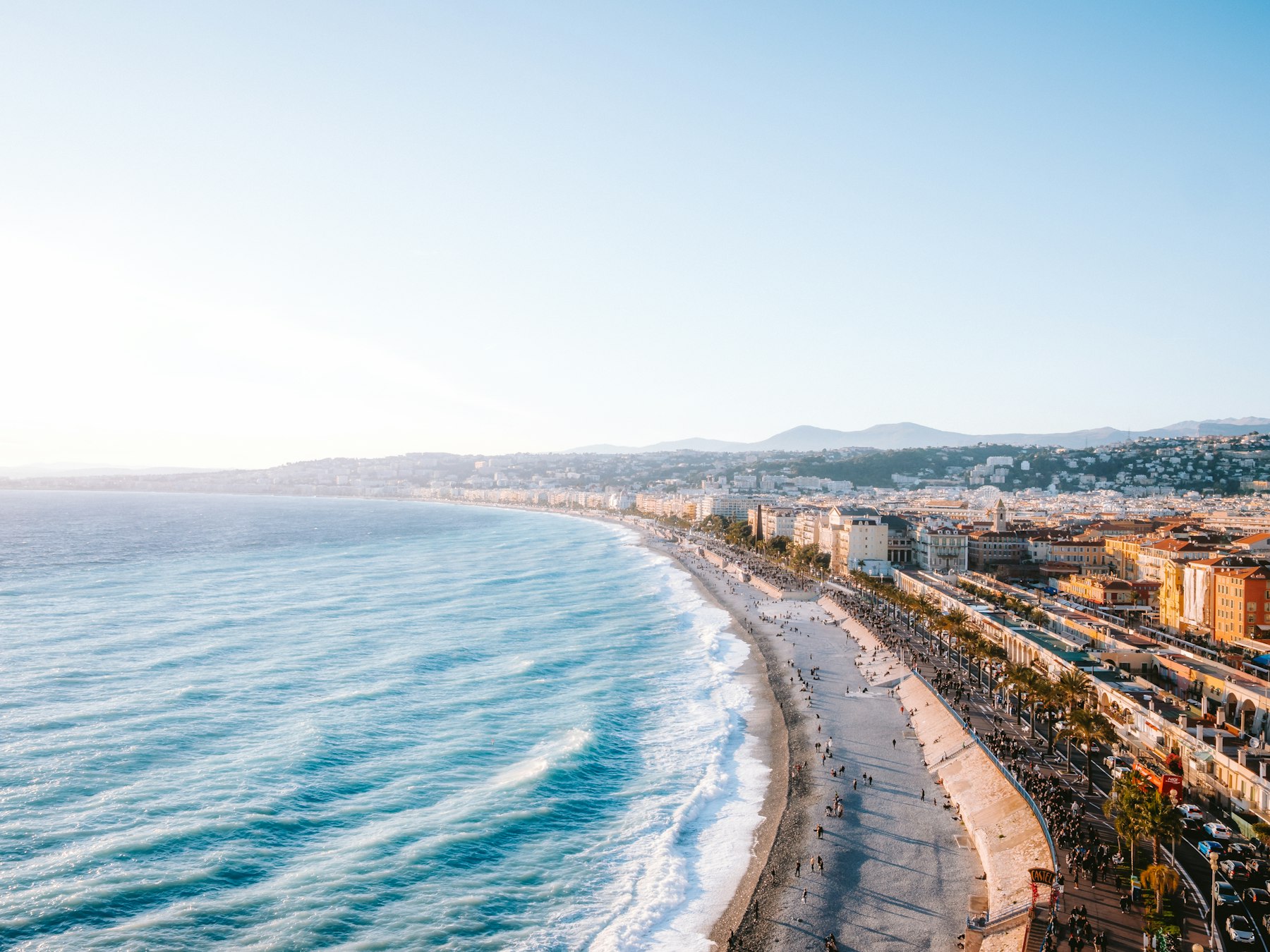
- Coffee is the one category in Nice that nobody owns
- Twelve million visitors a year, thirty thousand students, a growing office population
- €927,000 of revenue at 26% EBE, well above a proven local comparable
- €40,000 to start trading, leasing an existing business rather than buying one
- The business buys its own asset in year three, out of what it earns
Read the short version, or open the detail on any section.
What Nice has already decided
Nice guards its favourites carefully, and most of the categories worth having already belong to somebody. Coffee is the exception. The city has respected places but no single address that everyone names, in a category people search for every day.
Why coffee and not the restClose
Knowing which ones are genuinely closed is the first useful thing to establish, because it saves a great deal of wasted effort later.
Coffee sits differently. The city has respected places, Cafés Indien, HUG, French Coffee Shop and Canopée among them, but no single address that everyone names. One published review of a shop that Google itself labels as specialty calls it overpriced and unremarkable, and argues that coffee in Nice generally underdelivers for what it costs. That is a complaint sitting in public, in a category people already search for, with nobody answering it.
Where the customers come from
The strongest sites in Nice draw on more than one kind of customer, which is what allows them to trade in February as well as August. Visitors carry the summer, offices and the university carry the weekdays, and the people who live nearby build the habit.
Visitors
More than half arrive from outside France, a higher share than before the pandemic, and those arriving by air spend upwards of €110 a day. Hotel occupancy reaches 85% between June and September.
Students
Université Côte d'Azur runs five of its six main campuses in Nice. Valrose is among the best situated university campuses in France, sitting on the tram and a few minutes from Gare Nice-Ville.
Offices
The largest business district in the Alpes-Maritimes sits to the west, and the centre itself is thick with law firms, consultancies and medical practices working at street level.
Residents
Libération sits above the national average on income and below it on unemployment, while in the Carré d'Or well over half of working residents are managers or professionals.
The numbers behind eachClose
The bar is lower than it sounds. Around a hundred and fifty transactions a day in the quieter months, which at a fifteen in a thousand capture rate means ten thousand people walking past, an ordinary figure for a central Nice street during trading hours. Building the local habit needs roughly 3.4% of Libération's residents, or 8.2% of the Carré d'Or's, to come once or twice a week.
Two businesses, one address
The winter operation and the summer operation are not the same business at different volumes. From October to May the menu is cold and assembled, which means no chef and three people. From June to September the kitchen opens, a chef and a commis arrive, and the terrace runs late.

The cold house
A counter, a fridge, a press and a grinder. Sandwiches built on bought-in quality rather than technique, pastry from a boulangerie, and coffee that justifies the trip. Three people, no chef, no kitchen running. The quality sits in the sourcing, which is a thing you buy well rather than cook well, and Nice has the suppliers to buy from.
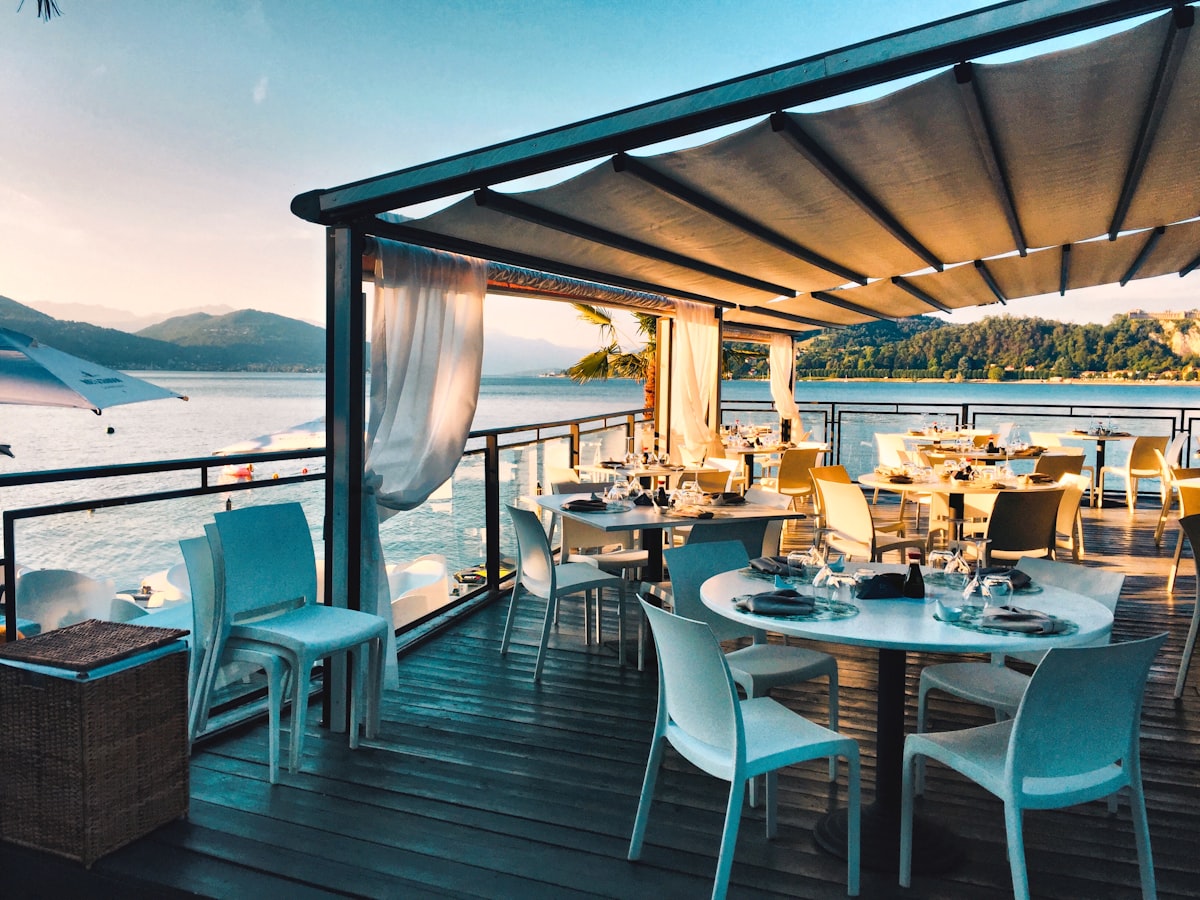
The full house
A chef and a commis arrive, four or five seasonal floor staff with them. The kitchen opens, twelve to fifteen cooked plates join the menu, and the terrace runs into the evening. The chef is not making sandwiches. The chef is making the difference between a fifteen euro ticket and a twenty two euro one.
Why this is the whole planClose
From October to May the menu is cold and assembled. Sandwiches on good bread, pastry from a boulangerie Koukou chooses carefully, coffee Koukou takes seriously. None of it is cooked, which means none of it needs a chef. Three people run the place. From June to September the kitchen switches on, a chef and a commis arrive, the plates get more ambitious and the terrace runs until late.
The cold layer does not disappear in summer. It carries breakfast and the quick half of lunch when two hundred and twenty people a day are coming through, which is precisely when you want half your covers leaving the counter rather than the pass.
Carrying a kitchen and a chef through eight quiet months is what makes most all-day operations marginal. Not carrying them is worth roughly a hundred thousand euro a year, and it is the single largest decision in this plan.
The economics, measured against real Nice accounts
€927,000 of revenue at 26% EBE, against 15% at a trading Carré d'Or restaurant of comparable size. The entire difference is the kitchen Koukou is not staffing for eight months of the year.
| Line | Share | Euro |
|---|---|---|
| Revenue, peak season | 63% | 580,800 |
| Revenue, off-peak | 37% | 346,500 |
| Food and beverage | 29% | (269,000) |
| Payroll, fully loaded | 28% | (260,000) |
| Redevance | 4.5% | (42,000) |
| Other charges | 12% | (111,000) |
| EBE | 26% | 245,300 |
How the payroll and the redevance workClose
The model assumes 120 peak days at around 220 transactions on a blended ticket of €22, and 210 quieter days at 110 transactions on €15. It is drawn for a house of roughly 100 to 120 square metres, with about 40 covers inside and 20 on the terrace. Payroll is built from the two operating states rather than averaged across the year.
How the payroll is built
| Team | Months | Loaded cost |
|---|---|---|
| Core: head of house, two on counter, part-time weekend cover | 12 | 130,000 |
| Seasonal: chef, commis, five floor staff | 4 | 92,000 |
| Total | 222,000 |
Against €927,000 of revenue that is 24% payroll. The model below carries it at 28% for safety, which is still a long way below the 35 to 45% a conventional all-day operation runs at, because a conventional operation is paying a kitchen to stand still from October to May.
The redevance replaces rent and sits a little above it, because it buys the use of a trading business rather than an empty set of walls. At four and a half per cent of revenue it is still well inside the discipline below.
A trading restaurant of 120 covers in the Carré d'Or currently runs at 15% EBE on around €830,000 of revenue. This model sits well above that, and the entire difference is the kitchen Koukou is not staffing for eight months of the year.
The redevance test
Daniel's rule is that a single good trading day ought to cover a month's occupancy cost. At a redevance of three thousand five hundred a month, one peak day at a twenty two euro ticket needs a hundred and sixty transactions to clear it, which a full terrace does by the middle of the afternoon. Across a whole season the site covers its annual redevance many times over, and the rule holds under the new structure exactly as it did under the old one.
The winter stands on its own
The off-peak season is not a period to be survived on summer money. On three hundred and forty six thousand euro of revenue with three people and no kitchen, October to May carries its own food, payroll, redevance and overheads and still contributes roughly fifty seven thousand euro. That is what makes it possible to stay open all year while much of the city closes or cuts back, and staying open is what holds the search position.
Lease it first, own it later
€40,000 to start trading, against €180,000 to buy. Koukou leases an existing business, runs it under its own name for a year, and buys it in year three out of what it earns.
One. Take it on. €40,000.
A location-gérance contract on a site already trading, with a purchase option written in from the start.
Two. Buy it. Paid for by the business.
Two settled years produce enough to exercise the option and acquire the fonds outright, in cash, with no further call on the partners.
The structure and what it costsClose
France has a structure built for exactly this. Under location-gérance you lease an existing fonds de commerce and operate it, paying the owner a monthly redevance instead of buying the business outright. The owner keeps the asset, Koukou keeps the trade, and the entry cost falls from a hundred and eighty thousand euro to about forty. The contract runs a year with tacit renewal, which means the decision to commit properly is made after twelve months of real trading rather than before a single day of it.
Full operation from day one under Koukou's own name, standards and team. The contract is filed at the greffe and published in a journal of legal announcements, and the redevance carries VAT at twenty per cent. The purchase option matters more than the monthly figure, because a one-year term with tacit renewal is the structure's real weakness and the option is what closes it.
The first year is the test, and it is a test conducted on a real business rather than a projection. If the numbers land, Koukou buys. If they do not, the exposure is a deposit and some working capital rather than a hundred and eighty thousand euro of somebody else's fonds.
Koukou reaches the same asset position as an acquisition would have given it, roughly a year later, having risked forty thousand euro rather than a hundred and eighty.
| Line | Euro | Note |
|---|---|---|
| Deposit, three months redevance | 7,500 | Returnable at the end of the contract |
| Legal, contract, greffe filing and publication | 2,000 | Location-gérance has formal requirements |
| Refresh, signage and branding | 5,000 | Built inside the group rather than bought from an agency |
| Coffee equipment | 3,000 | Leased or supplied through a roaster relationship |
| Working capital, two months | 22,500 | The site is already trading, so there is no ramp from zero |
| Total | 40,000 |
Working capital is lower here than it would be on an acquisition, and that is a consequence of the structure rather than a saving Koukou has chosen. Taking over a trading business means taking over its customers, so there is no ramp from zero and no dead months before the first euro. If the site is not already trading, the number goes back up and the argument for this route weakens considerably.
The return here is not an asset Koukou owns on day one. It is the rate at which capital comes back. Forty thousand euro of entry against roughly two hundred and forty five thousand of annual EBE means the business repays its entire starting cost inside two months of settled trading. Everything after that is either distribution or the fund that buys the fonds in year three, at which point the asset arrives on the balance sheet having been paid for by the trade rather than by the partners.
Beyond the single house, this would be the group's first address in Europe. A Nice business that works becomes a template, a set of supplier relationships, a French operating structure and a credential in a market that takes hospitality seriously. Casa Kinta took Grupo Marea from one restaurant to a portfolio. This would take the portfolio across an ocean.
The early years pay in the speed at which the money comes back rather than in the size of the asset, and the asset follows on behind. For a first venture in an unfamiliar market, that is the right order.
What Koukou is accepting
Five things are genuinely uncertain and worth stating plainly. An owner cannot grant location-gérance unless they have run the fonds for at least two years themselves, which disqualifies more sites than expected and has to be checked early on every candidate. The contract typically runs a year with tacit renewal, so without a purchase option written in from the start Koukou improves a business somebody else can take back. The winter ticket is modelled at fifteen euro against roughly nine at comparable cold-menu operations elsewhere, and better sourcing has to carry that gap. Recruiting a chef for four months on the Côte d'Azur means hiring in the same weeks as every restaurant between Menton and Saint-Tropez. And through the first two years Koukou holds no asset at all, which is the price of the lower entry and should be understood as a deliberate trade rather than an oversight.
Being found
Four questions in Nice have no settled answer: best coffee, best breakfast, best place to work, best iced coffee. All four are answered by the same house, in the same hours, with the same product.
How each one gets wonClose
Breakfast is the most interesting of the four. Every guide to the city names a different set of places, and one or two resort to inventing sub-categories because no single address commands the answer. It is worth separating from brunch, which is thoroughly taken. Brunch is a weekend occasion, whereas breakfast is a weekday habit, and it is habit that keeps the tables full through the winter.
Working from a café barely exists as Nice writing at all, while Paris supports several dedicated guides to the subject, and Nice has thirty thousand students and a growing office population who need somewhere to sit. Iced coffee has no Nice answer whatsoever, in a city that is warm for five months of the year.
Nobody out-heritages Nice, but there is a good deal of room to be more modern than it currently is.
All four of those questions are answered by the same house, in the same hours, with the same product. Coffee is the front door, breakfast is the reason to return tomorrow, working is the reason to stay two hours, and iced coffee is the thing that leaves the building in somebody's hand. Every one of them fills the lunch tables.
How they get won
Local ranking runs on how recently and how consistently people have written about a place, and on details that can be verified rather than asserted. That makes it a matter of running the business well rather than of marketing it hard.
Naming the roaster and the origin, and being straightforward about who is making the coffee, gives people something concrete to repeat. A deliberate programme of asking for reviews in the first ninety days, built into how the house is run rather than bolted on afterwards, does most of the rest. Recognition does more than either, because somebody who is greeted by name and handed their usual will write about it, and a well served stranger usually will not.
There is also an advantage in simply staying open. A great many independent places in Nice close or cut back hard through the winter, and their standing in local search weakens a little every year as a result. A business whose weekday trade comes from residents, students and nearby offices can keep going through the quiet months on its own demand, and the gap widens slightly with every season.
The welcome
What Nice is short of is not a cuisine but a manner of looking after people. Latin American hospitality is warmer by habit than French café convention, it cannot be copied by the place two doors down, and it costs nothing in service time.
- A second counter for regulars
- Bought better, not cooked harder
- Something to take away
- A short menu, properly done
- The terrace treated as the main event
What each one actually meansClose
The published complaint about coffee in Nice is that it is expensive and unremarkable, which is as much a judgement about how customers are treated as about what is in the cup. Latin American hospitality is warmer by habit than French café convention tends to be, it cannot be copied by the place two doors down, and it costs nothing in service time. Everything else that makes the place distinctive has to sit alongside the transaction rather than inside it, because anything that slows the counter down works against the format.
Somewhere for standing orders and familiar faces to be handed a coffee without queueing behind a visitor still reading the menu. It serves the locals properly, and it has the useful side effect of showing every visitor that the place is genuinely somebody's local rather than somewhere arranged for tourists.
For eight months of the year the quality is decided before anything reaches the counter. The baker, the butcher, the roaster and the boulangerie are the kitchen from October to May, which makes those relationships strategic rather than transactional. A jambon-beurre is three ingredients and every one of them is somebody else's craft. Choosing those suppliers well is the single most important operational decision in the winter business.
Canned cold brew and bottled filter from a fridge by the door. Full price, no time at the machine, the best margin in the building, and the name travels out into the city in somebody's hand. Sold in returnable glass, every one of them carries a small reason to come back.
Restraint reads as confidence, and it is faster to cook, quicker to order from and less wasteful besides. In a market whose complaint is that things are unremarkable, six dishes done beautifully will beat twenty done adequately.
Most places treat the terrace as spillover. It is worth treating it as the point: shade, comfortable chairs and an hour of sitting without being moved on. The counter earns its money on speed and the terrace earns its money on the time people are willing to spend there.
The thing that compounds over time is recognition. Knowing somebody's order, their name and what happened to them last week costs nothing, cannot be bought by a competitor and is the actual reason a person comes four times a week rather than twice a month.
The difficulty is that it usually lives in one barista's memory and leaves when they do, so it needs building into how the house is run: named tabs, a note of the usual order, and a handover between shifts that covers people rather than only stock.
What would turn this into a decision
Five things, none of them expensive, and between them they close the remaining unknowns.
Finding an owner who wants out but not out
Location-gérance is rarely advertised, because listing signals distress to staff and suppliers. It moves through agents. The approach is not to ask what is available, it is to explain that Koukou's partners own restaurants abroad, are relocating to Nice, and are looking for an owner who wants to keep their fonds and stop running it. That is a proposition an agent can take to a specific client they already have.
Counting the street
An hour at eight, an hour at one and an hour at seven, on a Tuesday and again on a Saturday, in three parts of the city with different characters. Two days of somebody's time, and the last real unknown in the model is closed.
Ticket and throughput from the kitchen
Real numbers from Daniel and Rodrigo for the coffee and lunch format, replacing sector averages with what the two of them already know from running restaurants.
A shortlist held against the rent rule
A working kitchen, extraction already installed, a terrace, and a monthly rent that a single good day clears. Anything that fails that test comes off the list regardless of how the frontage looks.
Opening in April or May
A spring opening buys a full first season in which to build cash, reputation and reviews before meeting the first winter. It is worth more than the difference between two good properties.
Settling what the chef role actually is
A kitchen that runs four months does not need a full-time chef on a twelve-month salary, but the business does need someone running it all year. Those are two different jobs and the plan currently describes one person doing both. Resolving that before anyone is offered anything specific is worth more than another month of property searching.
Nice has the visitors, the students, the offices and the money. What it lacks is somewhere everyone agrees on for a coffee, for breakfast, or for sitting down to work, and one place could answer all three.